When couples think about planning a sustainable wedding, transportation isn't usually the first thing that comes to mind. They might prioritize locally sourced flowers, reusable décor, seasonal menus, or reducing single-use plastics. But there's another significant part of the wedding's environmental footprint that often goes overlooked: getting everyone and everything to the celebration.
And while no wedding can eliminate transportation entirely, there are practical ways couples and wedding professionals can make more thoughtful choices.
1. Choose a Venue That Minimizes Travel
One of the most effective ways to reduce wedding transportation emissions is to consider the location of the celebration before booking a venue. Whenever possible, look for venues that are conveniently located near accommodations, public transportation, and major travel routes.
Consider hosting the ceremony and reception at the same location rather than requiring guests to travel between multiple venues. If your ceremony needs to be at a different venue, consider finding a venue that minimizes travel time or uses a shuttle service for guests.
If you're planning a destination wedding, consider how far guests will need to travel from the airport to their accommodations and from their accommodations to the venue.
Reducing unnecessary travel distances can make a meaningful difference before the wedding even begins.

Photo Provided By Capture the Canvas featuring Memory Lane and Champagne Petal Rentals
2. Encourage Carpooling and Shared Transportation
When guests travel individually, the number of vehicles on the road increases.
Encouraging guests to carpool is a simple way to reduce the number of vehicles needed to transport everyone to the event.
Couples can make this easier by:
Creating a voluntary carpool group for guests. Carpool and Ride Share is a great resource to make carpool planning easier.
Connecting guests staying at the same hotel.
Arranging shared transportation from designated pickup locations such as train stations, bus stations, or airports.
Providing information about nearby public transportation.
Offering shuttle services for guests traveling between accommodations and the venue.
For larger weddings, a shuttle service may be more efficient than having dozens of individual vehicles make the same journey.
3. Consider Using Local Vendors
When comparing vendors, consider where their businesses are located, where they source their materials, and how far they’ll travel to service your venue.
A local rental company may be able to provide the same products as a company transporting inventory from several states away.
However, local sourcing isn't automatically more sustainable in every situation. The type of transportation, number of trips, vehicle efficiency, and production methods all matter.
The goal is to consider transportation as one factor in the overall environmental impact of your wedding decisions.
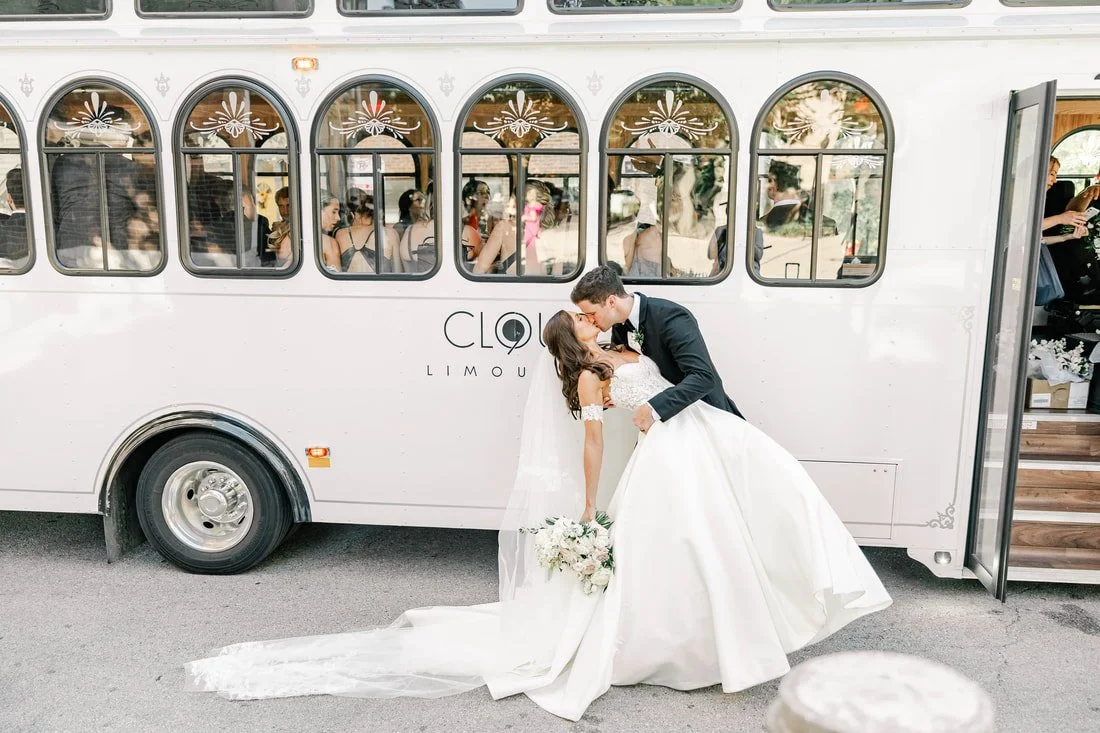
Photo Provided by Cloud 9 Limousine
4. Ask Vendors About Their Transportation Practices
Couples don't need to become experts in logistics and carbon emissions to make more informed decisions.
Simply asking vendors a few questions can help bring transportation practices into the conversation.
Consider asking:
Do you consolidate deliveries when possible?
Do you use reusable transportation containers?
How do you plan delivery routes?
Do you offer options that reduce the number of required trips?
For wedding professionals, these are also opportunities to communicate the operational improvements they're already making.
Sustainability isn't just about what a business sells. It's also about how that business operates.