

By Daniel Luna, Luniks Entertainment
When people picture sustainability at a wedding or special event, they may first think of flowers, catering, décor, or waste left behind at the end of the night. Those are important parts of the conversation, but sustainability also extends to the vendors working behind the scenes.
As an entertainment company, we rely on technology, transportation, lighting, sound equipment, and detailed event documents to do our work. That means we have many opportunities to make thoughtful choices—not necessarily through one dramatic change, but through practical habits repeated at every event.
At Luniks Entertainment, our approach is simple: use less when we can, invest in equipment that lasts, extend the life of technology, and dispose of electronics responsibly. Here are several practices we have implemented, along with ideas we hope more professionals throughout the events industry will consider.
Going Digital on Event Day
A wedding DJ needs quick access to a surprising amount of information: timelines, ceremony cues, wedding-party introductions, pronunciation notes, formal-dance selections, speech order, special announcements, vendor contacts, and backup plans.
In the past, it was common to print several pages for every event—and then print them again whenever a timeline changed. We now use a Lenovo tablet to access our day-of documents digitally. It keeps the information organized, allows us to review updates without creating another stack of paper, and makes it easier to move between the ceremony, cocktail hour, and reception.
We still prepare carefully and keep appropriate backups because reliability is essential at a live event. However, digital documents have allowed us to significantly reduce routine printing without sacrificing organization or preparedness.
This is one of the easiest changes for many event professionals to make. DJs, planners, photographers, venue teams, and musicians can all use a tablet or laptop for timelines, shot lists, floor plans, cue sheets, and contact information. Shared digital documents also help ensure that everyone is working from the latest version rather than an outdated printout.
Keeping Office Printing to a Minimum
Sustainability on event day begins with everyday office habits. We minimize printing by using digital proposals, contracts, planning forms, questionnaires, invoices, and client communications whenever possible.
Not every document can or should be eliminated, but asking a simple question— “Does this truly need to be printed?”—can make a meaningful difference over the course of a year. When printing is necessary, combining documents, printing only final versions, and using both sides of the page can reduce unnecessary paper use.
For event companies, a digital workflow has benefits beyond sustainability. It can make information easier to search, reduce physical storage, simplify client updates, and help teams stay organized.
Giving DJ Equipment a Second Life
The events industry depends heavily on equipment, and technology changes quickly. When older DJ gear no longer fits our current needs but remains functional, we try to resell it instead of throwing it away.
A controller, speaker, mixer, light, or case that no longer makes sense for one company may be exactly what a newer DJ, smaller production company, community organization, or hobbyist needs. Reselling functional equipment extends its useful life, keeps it out of the waste stream, and can make professional tools more accessible to someone building their business.
We also consider reliable used equipment when making purchases. Buying used is not the right choice for every mission-critical item, but high-quality, well-maintained professional gear can continue performing for years. The key is to buy thoughtfully: research the model, inspect its condition, test it thoroughly, review its service history when possible, and make sure replacement parts or repairs remain available.
For us, used equipment is not about lowering standards. It is about recognizing that “new” and “reliable” are not always the same thing—and that quality equipment should be used for its full practical lifespan.
Investing in Durable, Energy-Efficient Gear
One of the most sustainable purchasing decisions a business can make is choosing equipment that will not need to be replaced frequently.
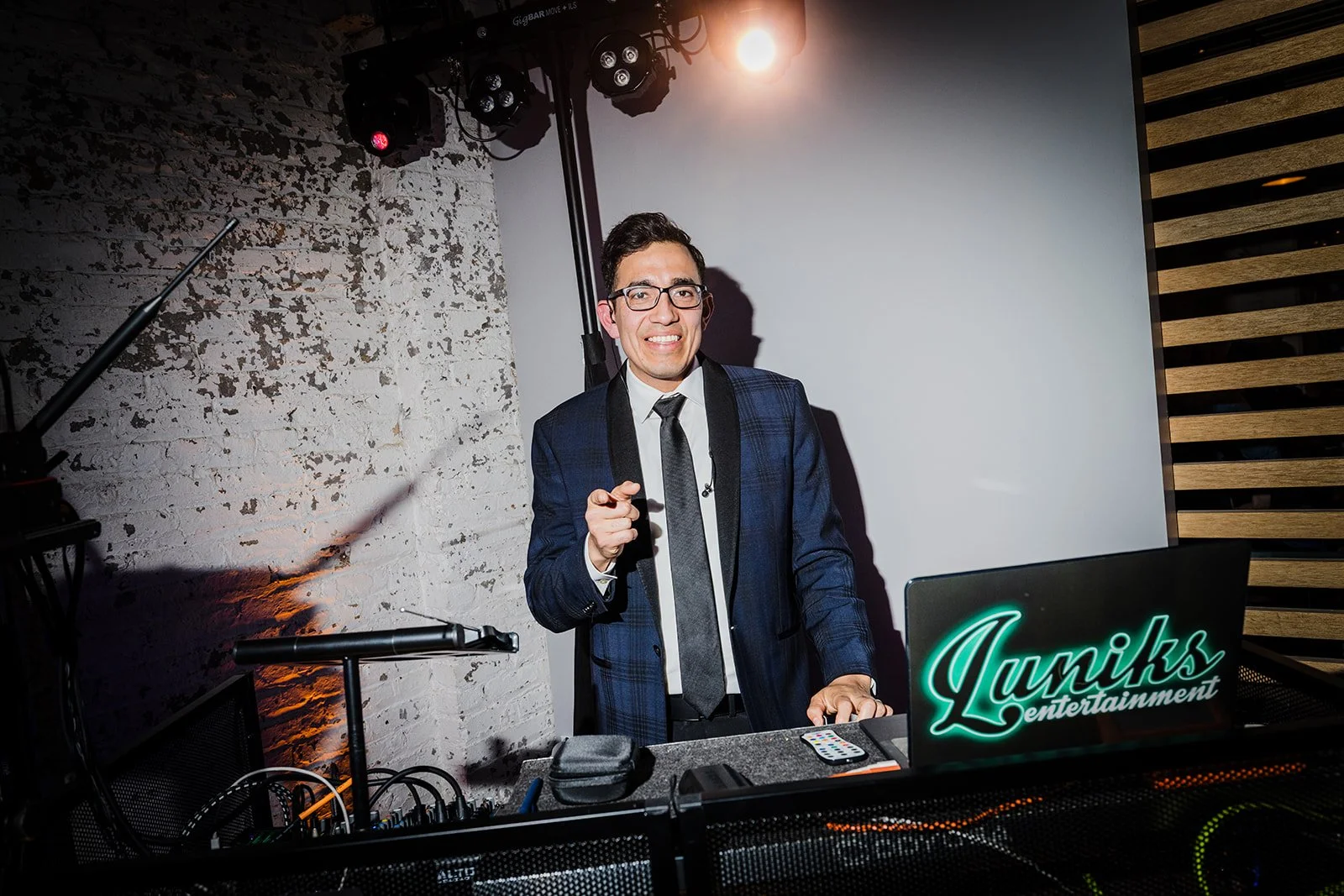
We invest in durable, high-grade digital controllers and sound equipment designed for professional use. Quality gear generally performs more consistently, can better withstand the demands of frequent events, and often have a longer service life when properly maintain. Preventive care matters too: protective cases, careful storage, regular cleaning, secure transportation, and timely repairs all help equipment last longer.
Our event lighting is also LED-based. LED fixtures use less energy than many traditional lighting technologies, produce less heat, and typically have a much longer operating life. For a DJ company, they also offer practical advantages such as lower power demands and greater flexibility when working in venues with limited electrical access.
Energy efficiency does not mean compromising the guest experience. Modern LED fixtures can create beautiful uplighting, dynamic dance-floor effects, and polished room transformations while using power more efficiently.
Recycling Electronics Responsibly
Eventually, every electronic device reaches the end of its useful life. Speakers, controllers, laptops, tablets, batteries, cables, and lighting fixtures should not automatically go into the regular trash.
When equipment cannot be safely repaired, reused, donated, or resold, we work to recycle it through an appropriate electronics-recycling option. E-waste can contain materials that should be handled separately from ordinary garbage, while some components can be recovered and reused.
Before recycling electronics, event professionals should also remove personal or client information, sign out of accounts, reset devices when possible, and confirm that the recycler accepts the specific type of equipment. Batteries may require a separate drop-off process.
Practical Steps Any Event Professional Can Take
Sustainable operations do not need to begin with a complete overhaul. A few realistic starting points include:
• Move timelines, cue sheets, floor plans, and contact lists to a tablet.
• Use collaborative digital documents so teams always have the newest version.
• Print only when a physical copy serves a clear purpose.
• Maintain and protect equipment so it stays in service longer.
• Repair before replacing when it is safe and cost-effective.
• Resell or donate working gear that no longer fits your needs.
• Consider reputable used professional equipment before buying new.
• Choose energy-efficient options, including LED lighting.
• Create a clear process for recycling electronics and batteries responsibly.
Progress Over Perfection
Live events are complex, and every business has different operational needs. There will be times when a printed backup is sensible, a new equipment purchase is necessary, or an older device can no longer be repaired. Sustainability is not about pretending those realities do not exist. It is about becoming more intentional.
At Luniks Entertainment, we are continuing to learn and improve. By reducing unnecessary printing, working digitally, choosing durable and energy-efficient equipment, extending the life of working gear, and responsibly recycling electronics, we can lessen waste while continuing to deliver the reliable, elevated experiences our clients expect.
If more of us in the events industry make thoughtful changes within our own areas of expertise, those small choices can add up to a meaningful collective impact—one event at a time.
